
Gas chromatography – super detective of the chemical world

GC–MS (gas chromatography–mass spectrometry) is one of the most important analytical techniques in modern chemistry. It is used whenever the exact composition of a sample needs to be determined—from food quality control and forensic investigations to pharmaceutical research. Successful analysis requires the target compounds to be sufficiently volatile, while the thermal decomposition of a sample at elevated temperatures can also provide valuable analytical information.
How does it work?
GC–MS combines two complementary analytical techniques:
- Gas Chromatography (GC) – The sample is first heated so that its components vaporize. The vaporized compounds are then carried through a long, narrow column, where they are separated according to their volatility and their interactions with the stationary phase of the column. As a result, each compound exits the column at a different retention time.
- Mass Spectrometry (MS) – After leaving the chromatograph, the separated compounds enter the mass spectrometer, where they are ionized and fragmented into ions. These ions are then separated according to their mass-to-charge (m/z) ratio. Each molecule produces a unique mass spectrum—a characteristic "fingerprint" that enables its identification.
Why is GC–MS so powerful?
Gas chromatography reveals when a compound elutes from the column, but not necessarily what it is. Mass spectrometry, on the other hand, can accurately identify a compound but requires a clean, well-separated signal. By combining the two techniques, GC–MS provides:
- highly accurate compound identification;
- the ability to detect extremely low concentrations;
- the capability to analyze complex mixtures (such as paints and coatings, blood, soil, or perfumes).
Applications
GC–MS has an exceptionally broad range of applications, including:
- Forensic science – detection of drugs, poisons, and explosives;
- Industry (e.g., paints and coatings, plastics, rubber) – identification of odorous and hazardous compounds;
- Environmental analysis – monitoring air and water pollution;
- Food industry – analysis of aromas, flavors, and contaminants;
- Medicine – diagnosis of metabolic disorders;
- Cosmetics and perfumery – characterization of fragrances and essential oils.
Did you know?
GC–MS is even used to analyze samples from space. Instruments aboard space probes examine the chemical composition of planetary atmospheres and cometary surfaces, searching for traces of organic compounds and other substances.
Simply put, GC–MS is like a super detective of the chemical world: it first separates all the "suspects" and then identifies each one with remarkable precision.
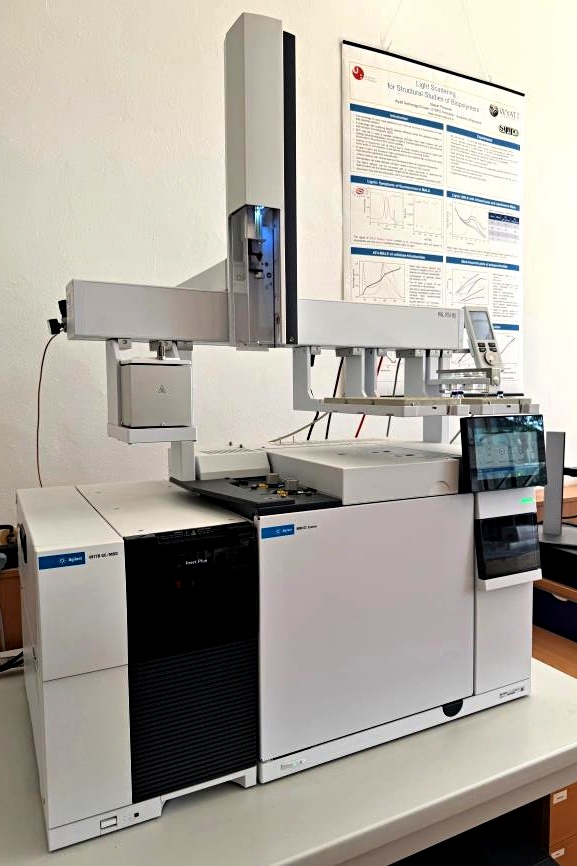
Chromatograph
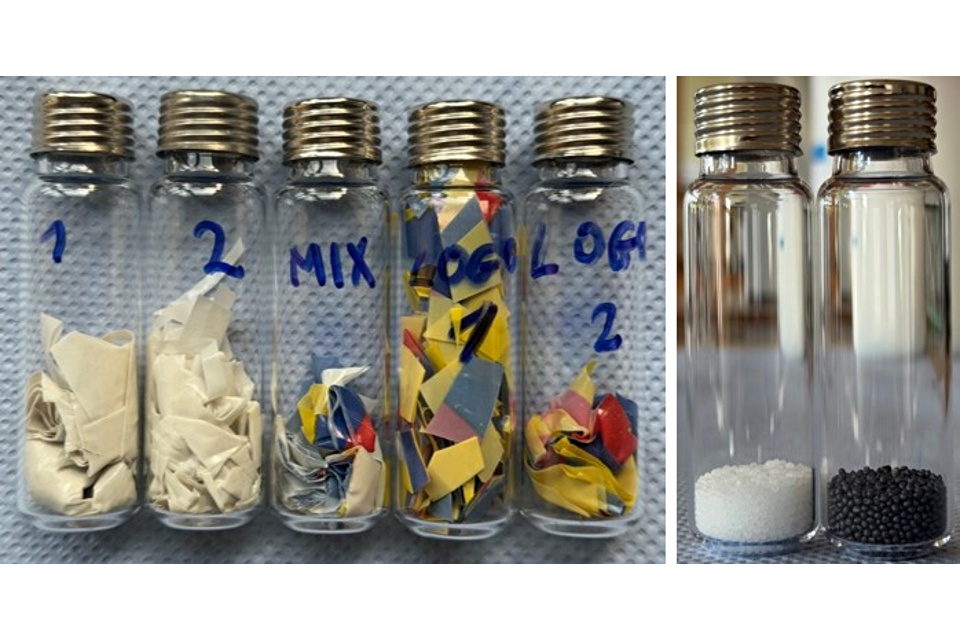
Typical appearance of samples
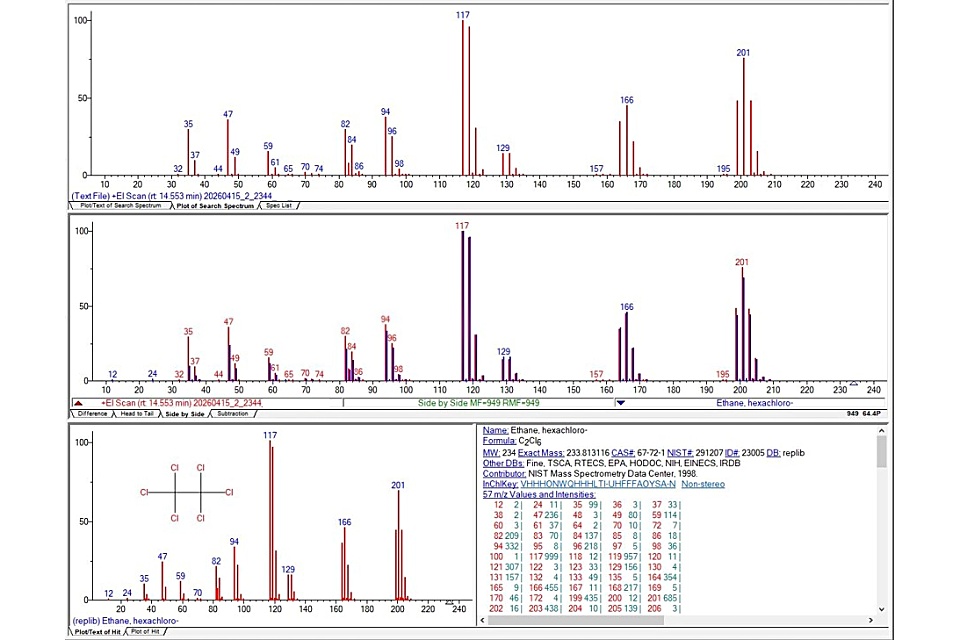
Analysis results – analysis and comparison of chromatograms